


Page 64 - Sustaining Accommodation SMES
P. 64
6Analysis

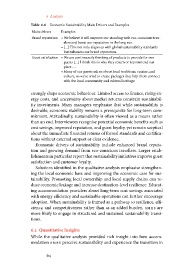
                Table 6.6 Economic Sustainability Main Drivers and Examples
                Main drivers  Examples
                Brand reputation • We believe it will improve our standing with eco-conscious trav-
                               elers and boost our reputation in the long run.
                              • [...] This not only aligns us with global sustainability standards
                               but enhances our brand reputation.
                Guest satisfaction • We are continuously thinking of products to provide for our
                               guests [...] I think this is why they return or recommend our
                               place ...
                              • Many of our guests ask us about local traditions, cuisine, and
                               culture, so we’ve tried to create packages that help them connect
                               with the local community and cultural heritage.

                strongly shape economic behaviour. Limited access to finance, rising en-
                ergy costs, and uncertainty about market returns constrain sustainabil-
                ity investments. Many managers emphasise that while sustainability is
                desirable, economic stability remains a prerequisite for long-term com-
                mitment. Attitudinally, sustainability is often viewed as a means rather
                than an end. Interviewees recognise potential economic benefits such as
                cost savings, improved reputation, and guest loyalty, yet remain sceptical
                about the immediate financial returns of formal standards and certifica-
                tions without external support or clear evidence.
                  Economic drivers of sustainability include enhanced brand reputa-
                tion and growing demand from eco-conscious travellers. Larger estab-
                lishmentsinparticularreportthatsustainabilityinitiatives improveguest
                satisfaction and customer loyalty.
                  Solutions identified in the qualitative analysis emphasise strengthen-
                ing the local economic base and improving the economic case for sus-
                tainability. Promoting local ownership and local supply chains can re-
                duce economic leakage and increase destination-level resilience. Educat-
                ing accommodation providers about long-term cost savings associated
                with energy efficiency and sustainable operations can further encourage
                adoption. When sustainability is framed as a pathway to resilience, effi-
                ciency, and competitiveness rather than as an added burden, smes are
                more likely to engage in structured and sustained sustainability transi-
                tions.


                6.2 Quantitative Insights
                While the qualitative analysis provided rich insight into how accom-
                modation smes perceive sustainability and experience the transition in


                       64

