


Page 59 - Sustaining Accommodation SMES
P. 59
6.1 Qualitative Insights
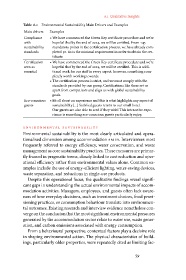
Table 6.1 Environmental Sustainability Main Drivers and Examples
Main drivers Examples
Compliance • Wehavecommenced theGreen Key certificateprocedure andwe’re
with hopeful that by the end of , we will be certified. From
sustainability mandatory points in the certification process, we have already com-
standards pleted . is the minimal requirement in order to obtain the cer-
tificate.
Certification • Wehavecommenced theGreen Key certificateprocedure andwe’re
seen as hopeful that by the end of , we will be certified. This is addi-
essential tional work for our staff in every aspect, however, something com-
pletely worth working towards.
• The certification process is strict, and we must comply with the
standards provided by our group. Certifications like these set us
apart from competitors and align us with global sustainability
goals.
Eco-conscious • It’s all about an experience and this is what highlights any aspect of
guests sustainability [...] Satisfied guests return to our small hotel.
Our guests are also able to seed if they wish! This interactive expe-
rience is something eco-conscious guests particularly enjoy.
environmental sustainability
Environmental sustainability is the most clearly articulated and opera-
tionalised dimension among accommodation smes. Interviewees most
frequently referred to energy efficiency, water conservation, and waste
management as core sustainability practices. These measures are primar-
ily framed in pragmatic terms, closely linked to cost reduction and oper-
ational efficiencyratherthanenvironmental values alone. Common ex-
amples include the use of energy-efficient lighting, water-saving devices,
waste separation, and reductions in single-use products.
Despite this operational focus, the qualitative findings reveal signifi-
cant gaps in understanding the actual environmental impacts of accom-
modation activities. Managers, employees, and guests often lack aware-
ness of how everyday decisions, such as investment choices, food provi-
sioning practices, or consumption behaviour translate into environmen-
tal outcomes. Existing research and interview evidence nonetheless con-
vergeonthe conclusionthatthe most significantenvironmental pressures
generated by the accommodation sector relate to water use, waste gener-
ation, and carbon emissions associated with energy consumption.
From a behavioural perspective, contextual factors play a decisive role
in shaping environmental action. The physical characteristics of build-
ings, particularly older properties, were repeatedly cited as limiting fac-
59

