


Page 69 - Sustaining Accommodation SMES
P. 69
6.2 Quantitative Insights
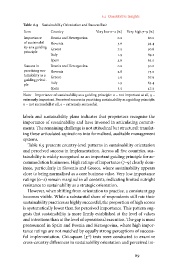
Table 6.9 Sustainability Orientation and Success Rate
Item Country Very low –() Very high – ()
Importance Bosnia and Herzegovina . .
of sustainabil- Slovenia . .
ity as a guiding
Greece . .
principle
Italy . .
Spain . .
Success in Bosnia and Herzegovina . .
practicing sus- Slovenia . .
tainability as a
Greece . .
guiding princi-
Italy . .
ple
Spain . .
Notes Importance of sustainability as a guiding principle: 0 – not important at all, 9 –
extremely important. Perceived success in practicing sustainability as a guiding principle:
0 – not successfull at all, 9 – extremely successful.
labels and sustainability plans indicates that proprietors recognise the
importance of sustainability and have invested in articulating commit-
ments. The remaining challenge is not attitudinal but structural: translat-
ing these articulated aspirations into formalised, auditable management
systems.
Table 6.9 presents country-level patterns in sustainability orientation
and perceived success in implementation. Across all five countries, sus-
tainability is widely recognised as an important guiding principle for ac-
commodation businesses. High ratings of importance (7–9) clearly dom-
inate, particularly in Slovenia and Greece, where sustainability appears
close to being normalised as a core business value. Very low importance
ratings (0–2) remain marginal in all contexts, indicating limited outright
resistance to sustainability as a strategic orientation.
However, when shifting from orientation to practice, a consistent gap
becomes visible. While a substantial share of respondents still rate their
sustainability practices as highly successful, the proportion of high scores
is systematically lower than for perceived importance. This pattern sug-
gests that sustainability is more firmly established at the level of values
and intentions than at the level of operational execution. The gap is most
pronounced in Spain and Bosnia and Herzegovina, where high impor-
tance ratings are not matched by equally strong perceptions of success-
2
ful implementation. Chi-square (χ ) tests were conducted to examine
cross-country differences in sustainability orientation and perceived im-
69

