


Page 45 - Educational Leadership in a Changing World
P. 45
Unearthing Context
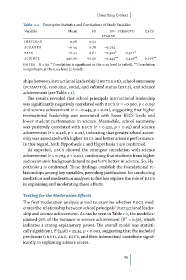
Table 2.1 Descriptive Statistics and Correlations of Study Variables
Variable Mean sd in- schauto escs
stlead
instlead . .
schauto –. . –.
escs –. . –.* .*
science . . –.** .** .**
notes N = 60. *Correlation is significant at the 0.05 level (2-tailed). **Correlation
is significant at the 0.01 level (2-tailed).
ships between instructional leadership (instlead), school autonomy
(schauto), economic, social, and cultural status (escs), and science
achievement (see Table 2.1).
The results revealed that school principals instructional leadership
was significantly negatively correlated with escs (r = –0.300, p <0.05)
and science achievement (r =–0.443, p < 0.01), suggesting that higher
instructional leadership was associated with lower ESCS levels and
lower student performance in science. Meanwhile, school autonomy
was positively correlated with escs (r =0.322, p < 0.05) and science
achievement (r =0.416, p < 0.01), indicating that greater school auton-
omy was associated with higher escs and better science performance.
In this regard, both Hypothesis 1 and Hypothesis 2 are confirmed.
As expected, escs showed the strongest correlation with science
achievement (r = 0.703, p < 0.01), confirming that students from higher
socioeconomic backgrounds tend to perform better in science. So, Hy-
pothesis 3 is confirmed. These findings establish the foundational re-
lationships among key variables, providing justification for conducting
mediation and moderation analyses to further explore the role of escs
in explaining and moderating these effects.
Testing for the Moderation Effects
The first moderation analysis aimed to examine whether escs mod-
erates the relationship between school principals’ instructional leader-
ship and science achievement. As can be seen in Table 2.2, the model ex-
2
plained 56 of the variance in science achievement (R = 0.56), which
indicates a strong explanatory power. The overall model was statisti-
cally significant, F (3,56) = 23.34, p < 0.001, suggesting that the included
predictors (instlead, escs, and their interaction) contribute signif-
icantly to explaining science scores.
45

