


Page 49 - Educational Leadership in a Changing World
P. 49
Unearthing Context
escs
Figure 2.6
Mediating Effect –0.41* 56.51**
of escs between
Instructional
c =−31.49**
Leadership and instlead science
Science Scores c =−54.78**
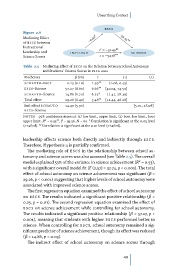
Table 2.5 Mediating Effect of escs on the Relation between School Autonomy
and Students’ Science Scores in pisa 2022
Predictors β (se) t () ()
schauto–escs . (.) .** [., .]
escs–Science . (.) .** [., .]
schauto–Science . (.) .* [., .]
Total effect . (.) .** [., .]
Ind. effect schauto– . (.) [., .]
escs–Science
notes 95 confidence interval: (1) low limit, upper limit, (2) boot low limit, boot
2
upper limit. R = 0.55**, F = 35.36, N = 60. *Correlation is significant at the 0.05 level
(2-tailed). **Correlation is significant at the 0.01 level (2-tailed).
leadership affects science both directly and indirectly through escs.
Therefore, Hypothesis 4 is partially confirmed.
The mediating role of escs in the relationship between school au-
tonomy and science scores was also assessed (see Table 2.5). The overall
2
model explained 53 of the variance in science achievement (R = 0.53),
with a significant overall model fit (F (2,57) = 32.74, p < 0.001). The total
effect of school autonomy on science achievement was significant (β =
29.26, p < 0.001) suggesting that higher levels of school autonomy were
associated with improved science scores.
The first regression equation examined the effect of school autonomy
on escs. The results indicated a significant positive relationship (β =
0.25, p = 0.01). The second regression equation examined the effect of
escs on science achievement while controlling for school autonomy.
The results indicated a significant positive relationship (β = 57.27, p <
0.001), meaning that students with higher escs performed better in
science. When controlling for escs, school autonomy remained a sig-
nificant predictor of science achievement, though its effect was reduced
(β =14.86, p =0.03).
The indirect effect of school autonomy on science scores through
49

