Page 89 - Glasbenopedagoški zbornik Akademije za glasbo v Ljubljani / The Journal of Music Education of the Academy of Music in Ljubljana, leto 7, zvezek 16 / Year 7, Issue 16, 2011
P. 89
a Biffio, NEW EXTENSIONS OF THE BEAUTIFUL CELLO TONE
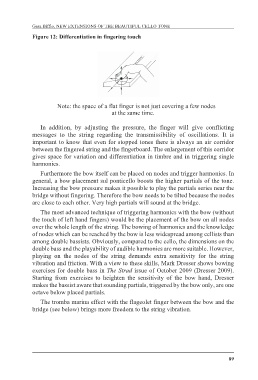
Figure 12: Differentiation in fingering touch
Note: the space of a flat finger is not just covering a few nodes
at the same time.
In addition, by adjusting the pressure, the finger will give conflicting
messages to the string regarding the transmissibility of oscillations. It is
important to know that even for stopped tones there is always an air corridor
between the fingered string and the fingerboard. The enlargement of this corridor
gives space for variation and differentiation in timbre and in triggering single
harmonics.
Furthermore the bow itself can be placed on nodes and trigger harmonics. In
general, a bow placement sul ponticello boosts the higher partials of the tone.
Increasing the bow pressure makes it possible to play the partials series near the
bridge without fingering. Therefore the bow needs to be tilted because the nodes
are close to each other. Very high partials will sound at the bridge.
The most advanced technique of triggering harmonics with the bow (without
the touch of left hand fingers) would be the placement of the bow on all nodes
over the whole length of the string. The bowing of harmonics and the knowledge
of nodes which can be reached by the bow is less widespread among cellists than
among double bassists. Obviously, compared to the cello, the dimensions on the
double bass and the playability of audible harmonics are more suitable. However,
playing on the nodes of the string demands extra sensitivity for the string
vibration and friction. With a view to these skills, Mark Dresser shows bowing
exercises for double bass in The Strad issue of October 2009 (Dresser 2009).
Starting from exercises to heighten the sensitivity of the bow hand, Dresser
makes the bassist aware that sounding partials, triggered by the bow only, are one
octave below placed partials.
The tromba marina effect with the flageolet finger between the bow and the
bridge (see below) brings more freedom to the string vibration.
89
Figure 12: Differentiation in fingering touch
Note: the space of a flat finger is not just covering a few nodes
at the same time.
In addition, by adjusting the pressure, the finger will give conflicting
messages to the string regarding the transmissibility of oscillations. It is
important to know that even for stopped tones there is always an air corridor
between the fingered string and the fingerboard. The enlargement of this corridor
gives space for variation and differentiation in timbre and in triggering single
harmonics.
Furthermore the bow itself can be placed on nodes and trigger harmonics. In
general, a bow placement sul ponticello boosts the higher partials of the tone.
Increasing the bow pressure makes it possible to play the partials series near the
bridge without fingering. Therefore the bow needs to be tilted because the nodes
are close to each other. Very high partials will sound at the bridge.
The most advanced technique of triggering harmonics with the bow (without
the touch of left hand fingers) would be the placement of the bow on all nodes
over the whole length of the string. The bowing of harmonics and the knowledge
of nodes which can be reached by the bow is less widespread among cellists than
among double bassists. Obviously, compared to the cello, the dimensions on the
double bass and the playability of audible harmonics are more suitable. However,
playing on the nodes of the string demands extra sensitivity for the string
vibration and friction. With a view to these skills, Mark Dresser shows bowing
exercises for double bass in The Strad issue of October 2009 (Dresser 2009).
Starting from exercises to heighten the sensitivity of the bow hand, Dresser
makes the bassist aware that sounding partials, triggered by the bow only, are one
octave below placed partials.
The tromba marina effect with the flageolet finger between the bow and the
bridge (see below) brings more freedom to the string vibration.
89