Page 91 - Glasbenopedagoški zbornik Akademije za glasbo v Ljubljani / The Journal of Music Education of the Academy of Music in Ljubljana, leto 7, zvezek 16 / Year 7, Issue 16, 2011
P. 91
a Biffio, NEW EXTENSIONS OF THE BEAUTIFUL CELLO TONE
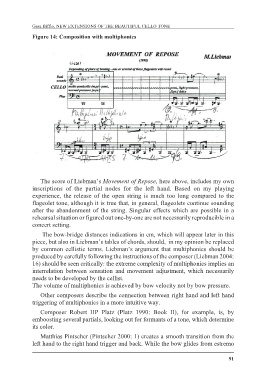
Figure 14: Composition with multiphonics
The score of Liebman’s Movement of Repose, here above, includes my own
inscriptions of the partial nodes for the left hand. Based on my playing
experience, the release of the open string is much too long compared to the
flageolet tone, although it is true that, in general, flageolets continue sounding
after the abandonment of the string. Singular effects which are possible in a
rehearsal situation or figured out one-by-one are not necessarily reproducible in a
concert setting.
The bow-bridge distances indications in cm, which will appear later in this
piece, but also in Liebman’s tables of chords, should, in my opinion be replaced
by common cellistic terms. Liebman’s argument that multiphonics should be
produced by carefully following the instructions of the composer (Liebman 2004:
16) should be seen critically: the extreme complexity of multiphonics implies an
interrelation between sensation and movement adjustment, which necessarily
needs to be developed by the cellist.
The volume of multiphonics is achieved by bow velocity not by bow pressure.
Other composers describe the connection between right hand and left hand
triggering of multiphonics in a more intuitive way.
Composer Robert HP Platz (Platz 1990: Book II), for example, is, by
emboosting several partials, looking out for formants of a tone, which determine
its color.
Matthias Pintscher (Pintscher 2000: 1) creates a smooth transition from the
left hand to the right hand trigger and back. While the bow glides from estremo
91
Figure 14: Composition with multiphonics
The score of Liebman’s Movement of Repose, here above, includes my own
inscriptions of the partial nodes for the left hand. Based on my playing
experience, the release of the open string is much too long compared to the
flageolet tone, although it is true that, in general, flageolets continue sounding
after the abandonment of the string. Singular effects which are possible in a
rehearsal situation or figured out one-by-one are not necessarily reproducible in a
concert setting.
The bow-bridge distances indications in cm, which will appear later in this
piece, but also in Liebman’s tables of chords, should, in my opinion be replaced
by common cellistic terms. Liebman’s argument that multiphonics should be
produced by carefully following the instructions of the composer (Liebman 2004:
16) should be seen critically: the extreme complexity of multiphonics implies an
interrelation between sensation and movement adjustment, which necessarily
needs to be developed by the cellist.
The volume of multiphonics is achieved by bow velocity not by bow pressure.
Other composers describe the connection between right hand and left hand
triggering of multiphonics in a more intuitive way.
Composer Robert HP Platz (Platz 1990: Book II), for example, is, by
emboosting several partials, looking out for formants of a tone, which determine
its color.
Matthias Pintscher (Pintscher 2000: 1) creates a smooth transition from the
left hand to the right hand trigger and back. While the bow glides from estremo
91