


Page 107 - Razvoj kompetenc prihodnosti v pedagoških študijskih programih
P. 107
Escape Rooms as an Active Learning Didactic Strategy
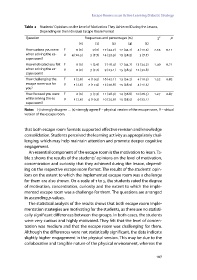
Table 2 Students’ Opinions on the Level of Motivation They Achieved During the Lesson,
Depending on the Individual Escape Room Format
Question Frequences and percentages () χ 2 p
() () () () ()
How curious you were F () () (.) (.) (.) . .
when solving the es- V (.) (.) (.) (.) (.)
cape room?
How motivated you felt F () (.) (.) (.) (.) . .
when solving the es- V () (.) (.) (.) (.)
cape room?
How challenging the F (.) (.) (.) (.) (.) . .
escape room was for V (.) (.) (.) (.) (.)
you?
How focused you were F () (.) (.) (.) (.) . .
whilesolving thees- V (.) (.) (.) (.) (.)
cape room?
Notes (1) strongly disagree ... (5) strongly agree; F – physical version of the escape room, V – virtual
version of the escape room.
that both escape room formats supported effective revision and knowledge
consolidation. Students perceived the learning activity as appropriately chal-
lenging, which may help maintain attention and promote deeper cognitive
engagement.
An essential component of the escape room is the motivation to learn. Ta-
ble 2 shows the results of the students’ opinions on the level of motivation,
concentration and curiosity that they achieved during the lesson, depend-
ing on the respective escape room format. The results of the students’ opin-
ions on the extent to which the implemented escape room was a challenge
for them are also shown. On a scale of 1 to 5, the students rated the degree
of motivation, concentration, curiosity and the extent to which the imple-
mented escape room was a challenge for them. The questions are arranged
in ascending p-values.
The statistical analysis of the results shows that both escape room imple-
mentation strategies are motivating for the students, as there are no statisti-
cally significant differences between the groups. In both cases, the students
were very curious and highly motivated. They felt that the level of concen-
tration was medium and that the escape room was challenging for them.
Although the differences were not statistically significant, the data indicate
slightly higher engagement in the physical version. This may be due to the
collaborative and tangible nature of the physical environment, whereas the
107

