


Page 91 - Sustaining Accommodation SMES
P. 91
6.2 Quantitative Insights
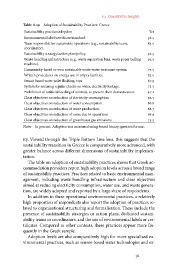
Table 6.19 Adoption of Sustainability Practices: Greece
Sustainability practice/adoption Yes
Environmental label/certificate/standard. .
Team responsible for sustainable operations (e.g., sustainability team, .
coordinator).
Sustainability strategy/action plan/policy. .
Waste handling infrastructure (e.g., waste separation bins, waste paper balling .
machine).
Community-based or own sustainable waste water treatment system. .
Written procedures on energy use in empty facilities. .
Sensor based water toilet flushing, taps .
System for ensuring regular checks on water, electricity leakage. .
Prohibition of artificial feeding of animals, to prevent their domestication. .
Clear objectives on reduction of electricity consumption. .
Clear objectives on reduction of water consumption. .
Clear objectives on reduction of waste production. .
Clear objectives on reduction of noise due to operations. .
Clear objectives on reduction of greenhouse gas emissions. .
Notes In percent. Adoption was measured using forced binary question format.
ity. Viewed through the Triple Bottom Line lens, this suggests that the
sustainability transition in Greece is comparatively more advanced, with
greater balance across different dimensions of sustainability implemen-
tation.
The table on adoption of sustainability practices shows that Greek ac-
commodation providers report high adoption levels across a broad range
of sustainability practices. Practices related to basic environmental man-
agement, including waste handling infrastructure and clear objectives
aimed at reducing electricity consumption, water use, and waste genera-
tion, are widely adopted and reported by a large share of respondents.
In addition to these operational environmental practices, a relatively
high proportion of respondents also report the adoption of practices re-
lated to organisational structuring and formalisation. These include the
presence of sustainability strategies or action plans, dedicated sustain-
ability teams or coordinators, and the use of environmental labels or cer-
tificates. Compared to other contexts, these practices appear more fre-
quentlyinthe Greeksample.
Adoption levels are also comparatively high for more specialised en-
vironmental practices, such as sensor-based water technologies and ex-
91

