


Page 87 - Sustaining Accommodation SMES
P. 87
6.2 Quantitative Insights
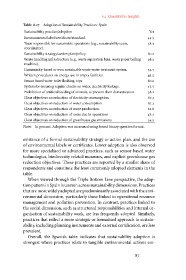
Table 6.17 Adoption of Sustainability Practices: Spain
Sustainability practice/adoption Yes
Environmental label/certificate/standard. .
Team responsible for sustainable operations (e.g., sustainability team, .
coordinator).
Sustainability strategy/action plan/policy. .
Waste handling infrastructure (e.g., waste separation bins, waste paper balling .
machine).
Community-based or own sustainable waste water treatment system. .
Written procedures on energy use in empty facilities. .
Sensor based water toilet flushing, taps .
System for ensuring regular checks on water, electricity leakage. .
Prohibition of artificial feeding of animals, to prevent their domestication. .
Clear objectives on reduction of electricity consumption. .
Clear objectives on reduction of water consumption. .
Clear objectives on reduction of waste production. .
Clear objectives on reduction of noise due to operations. .
Clear objectives on reduction of greenhouse gas emissions. .
Notes In percent. Adoption was measured using forced binary question format.
existence of a formal sustainability strategy or action plan, and the use
of environmental labels or certificates. Lower adoption is also observed
for more specialised or advanced practices, such as sensor based water
technologies, biodiversity related measures, and explicit greenhouse gas
reduction objectives. These practices are reported by a smaller share of
respondents and constitute the least commonly adopted elements in the
table.
When viewed through the Triple Bottom Line perspective, the adop-
tion pattern in Spain is uneven across sustainability dimensions. Practices
that are most widely adopted are predominantly associated with the envi-
ronmental dimension, particularly those linked to operational resource
management and pollution prevention. In contrast, practices linked to
the social dimension, such as structured responsibilities and internal or-
ganisation of sustainability work, are less frequently adopted. Similarly,
practices that reflect a more strategic or formalised approach to sustain-
ability, including planning instruments and external certification, are less
prevalent.
Overall, the Spanish table indicates that sustainability adoption is
strongest where practices relate to tangible environmental actions em-
87

