Page 115 - Sustaining Accommodation SMES
P. 115
6.2 Quantitative Insights

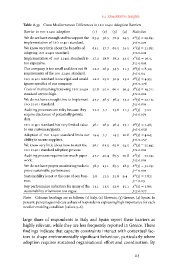
            Table 6.33 Cross Mediterranean Differences in iso 21401 Adoption Barriers
            Barrier to iso  adoption    ()  ()  ()  ()  Statistics
                                                                 2
            We do not have enough staff to support the . . . . x (3) = .;
            implementation of iso  standard.               p ≤ .
                                                                 2
            We know very little about the benefits of  . . . . x (3) = .;
            adopting iso  standard.                        p ≤ .
                                                                 2
            Implementation of iso  standards is  . . . . x (3) = .;
            too expensive.                                      p ≤ .
                                                                 2
            Our company is too small and does not fit  . . . . x (3) = .;
            requirements of the iso  standard.             p ≤ .
                                                                 2
            iso  standard is too rigid and would  . . . . x (3) = .;
            ignore specifics of our company.                    p ≤ .
                                                                 2
            Costs of maintaining/renewing iso   . . . . x (3) = .;
            standard are too high.                              p ≤ .
                                                                 2
            We do not have enough time to implement  . . . . x (3) = .;
            iso  standard.                                 p ≤ .
                                                                 2
            Auditing processes are risky because they  . .  . . x (3) = .
            require disclosure of potentially private           p ≤ .
            data.
                                                                 2
            iso  standard has very limited value  . . . . x (3) = .;
            to our customers/guests.                            p ≤ .
                                                                 2
            Adoption of iso  standard limits our . .  . . x (3) = .;
            ability to secure suppliers.                        p ≤ .
                                                                 2
            We know very little about how to start the  . . . . x (3) = .;
            iso  standard adoption process.                p ≤ .
                                                                 2
            Auditing process requires too much paper  . . . . x (3) = .;
            work.                                               p ≤ .
                                                                 2
            We do not have proper monitoring tools to  . . . . x (3) = .;
            prove sustainable performance                       p ≤ .
                                                                 2
            Sustainability is not at the core of our busi-  .  . . .  x (3) = .;
            ness                                                p ≤ .
                                                                 2
            Key performance indicators for many of the . . . . x (3) = .;
            sustainability criteria are too vague.              p ≤ .
            Notes Column headings are as follows: (1) Italy, (2) Slovenia, (3) Greece, (4) Spain. In
            percent; percentages indicate a share of respondents expressing high importance for each
            need or enabling condition (values 5–6).

            large share of respondents in Italy and Spain report these barriers as
            highly relevant, while they are less frequently reported in Greece. These
            findings indicate that capacity constraints interact with contextual fac-
            tors to shape environmentally significant behaviour, particularly where
            adoption requires sustained organisational effort and coordination. By


                                                                 115
   110   111   112   113   114   115   116   117   118   119   120