


Page 117 - Sustaining Accommodation SMES
P. 117
6.2 Quantitative Insights
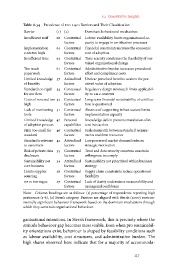
Table 6.34 Prevalence of iso 21401 Barriers and Their Classification
Barrier () () Dominant behavioural mechanism
Insufficient staff Contextual Labour availability limits organisational ca-
factors pacity to engage in certification processes
Implementation Contextual Financial constraints increase the economic
costs too high factors cost of adoption
Insufficient time Contextual Time scarcity constrains the feasibility of sus-
factors tained organisational change
Too much Contextual Administrative burden increases procedural
paperwork factors effort and compliance costs
Limited knowledge Attitudinal Unclear perceived benefits weaken the per-
of benefits factors ceived value of adoption
Standard too rigid Contextual Regulatory design mismatch limits applicabil-
for our firm factors ity to sme contexts
Costs of renewal too Contextual Long-term financial sustainability of certifica-
high factors tion is questioned
Lack of monitoring Contextual Absence of supporting infrastructure limits
tools factors implementation capacity
Limited knowledge Personal Knowledge deficit prevents translation of in-
of adoption process capabilities tent into action
Firm too small for Contextual Scale mismatch between standard require-
standard factors ments and firm resources
Standard irrelevant Attitudinal Low perceived market demand reduces
to customers factors strategic motivation
Risk of private data Contextual Trust and data security concerns constrain
disclosure factors willingness to comply
Sustainability not Attitudinal Sustainability not prioritised within business
core business factors strategy
Limits supplier Contextual Supply chain constraints reduce operational
sourcing factors flexibility
kpis too vague Contextual Lack of clarity undermines measurability and
factors managerial confidence
Notes Column headings are as follows: (1) percentage of respondents reporting high
pertinence (5-6), (2) Stern’s category. Barriers are aligned with Stern’s (2000) environ-
mentally significant behaviour framework based on the dominant mechanism through
which they constrain organisational behaviour.
ganisational intentions. In Stern’s framework, this is precisely where the
attitude behaviour gap becomes most visible. Even when pro sustainabil-
ity orientations exist, behaviour is shaped by feasibility conditions such
as labour availability, cost structures, and administrative burden. The
high shares observed here indicate that for a majority of accommoda-
117

