


Page 173 - Vseživljenjsko učenje kot temelj trajnostne družbe
P. 173
Ableism and Mindset of Future Educators
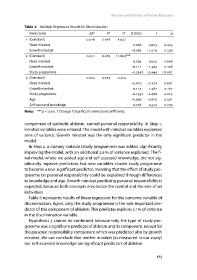
Table 6 Multiple Regression Results for Discrimination
Predictor(s) ΔR 2 R 2 F† β (Std.) t p
(Constant) . . .
Fixed mindset . . .
Growth mindset –. –. .
(Constant) . . .***
Fixed mindset –. –. .
Growth mindset –. –. .
Study programme –.‡ –. <.
(Constant) . . .
Fixed mindset –. –. .
Growth mindset –. –. .
Study programme –.‡ –. .
Age –. –. .
Self-assessed knowledge –. –. .
Notes ***p < 0.001. †Change. ‡Significant correlation coefficients.
component of symbolic ableism, named personal responsibility. In Step 1,
mindset variables were entered. The model with mindset variables explained
76 of variance. Growth mindset was the only significant predictor in the
model.
In Step 2, a dummy variable (study programme) was added, significantly
improving the model, with an additional 2.6 of variance explained. The fi-
nal model, where we added age and self-assessed knowledge, did not sig-
nificantly improve prediction, but new variables caused study programme
to become a non-significant predictor, meaning that the effect of study pro-
gramme on personal responsibility could be explained through differences
in knowledge and age. Growth mindset predicting personal responsibility is
expected, because both concepts emphasize the control and the role of an
individual.
Table 6 represents results of linear regression for the outcome variable of
discrimination. Again, only the study programme is the sole important pre-
dictor of this component of ableism. This predictor explains 5.1 of variance
in the discrimination variable.
Hypothesis 3 cannot be confirmed, because only the type of study pro-
gramme was a significant predictor of ableism and its component, except for
the personal responsibility component which was predicted also by growth
mindset. We can conclude that neither mindset (as measured in our study)
nor self-assessed knowledge are significant predictors of ableism.
173

