


Page 104 - Sustaining Accommodation SMES
P. 104
6Analysis
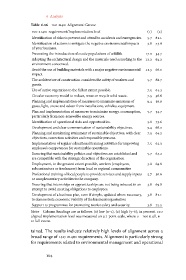
Table 6.26 iso 21401 Alignment: Greece
iso requirement/Implementation level () ()
Identification of risks to prevent and attend to accidents and emergencies. . .
Identification of actions to mitigate the negative environmental impacts . .
of your business.
Preventing the introduction of exotic populations of wildlife. . .
Adapting the architectural design and the materials used according to the ..
environment concerned.
Avoid the use of building materials with a major negative environmental . .
impact.
The architecture of construction considers the safety of workers and . .
guests.
Use of native vegetation to the fullest extent possible. . .
Circular economy model to reduce, reuse or recycle solid waste. . .
Planning and implementation of measures to minimize emissions of . .
gases, light, ozone and odour from installations, vehicles, equipment.
Plan and implementation of measures to minimize energy. consumption, . .
particularly from non-renewable energy sources.
Identification of operational risks and opportunities. . .
Development and clear communication of sustainability objectives. . .
Planning and monitoring attainment of sustainable objectives, with clear . .
objectives, correction activities and responsible persons.
Implementation of regular educational/training activities for improving . .
employee’s competences for sustainable operations.
Ensuring that sustainability policies and objectives are established and . .
are compatible with the strategic direction of the organisation
Employment, to the greatest extent possible, workers (employees, . .
subcontractors or freelancers) from local or regional communities
Professional training of local people to provide services and supply inputs . .
or complementary activities to the company.
Ensuring that internships or apprenticeships are not being misused in an . .
attempt to avoid meeting obligations to employees.
Development of a business plan, even if simple, updated where necessary, . .
to demonstrate economic viability of the business/organisation
Support to programmes for promoting tourist safety and security. . .
Notes Column headings are as follows: (1) low (0–1), (2) high (5–6); in percent. iso
aligned implementation level was measured on a 7-point scale, where 0 – not at all, 6 –
to full extent.
tained. The results indicate relatively high levels of alignment across a
broad range of iso 21401 requirements. Alignment is particularly strong
for requirements related to environmental management and operational
104

