


Page 417 - Vseživljenjsko učenje kot temelj trajnostne družbe
P. 417
Predictors of Preschool Teachers’ Environmental Activities in Kindergarten
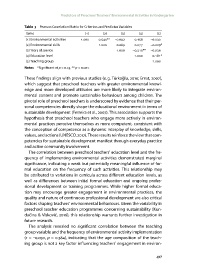
Table 3 Pearson Correlation Matrix for Criterion and Predictor Variables
Items () () () () ()
() Environmental activities . .** –. . –.
() Environmental skills . . . –.*
() Years of service . –.** –.
() Education level . .*
() Teaching group .
Notes *Significant at p <0.05, ** p < 0.001.
These findings align with previous studies (e.g. Türkoğlu, 2019; Ernst, 2007),
which suggest that preschool teachers with greater environmental knowl-
edge and more developed attitudes are more likely to integrate environ-
mental content and promote sustainable behaviours among children. The
pivotal role of preschool teachers is underscored by evidence that their per-
sonal competencies directly shape the educational environment in terms of
sustainable development (Ferreira et al., 2007). This association supports the
hypothesis that preschool teachers who engage more actively in environ-
mental practices perceive themselves as more competent, consistent with
the conception of competence as a dynamic interplay of knowledge, skills,
values,andactions(UNESCO,2017).Theseresultsreinforcetheviewthat com-
petencies for sustainable development manifest through everyday practice
and active community involvement.
The correlation between preschool teachers’ education level and the fre-
quency of implementing environmental activities demonstrated marginal
significance, indicating a weak but potentially meaningful influence of for-
mal education on the frequency of such activities. This relationship may
be attributed to variations in curricula across different education levels, as
well as differences between initial formal education and ongoing profes-
sional development or training programmes. While higher formal educa-
tion may encourage greater engagement in environmental practices, the
quality and nature of continuous professional development are also critical
factors shaping teachers’ environmental behaviours. Given the variability in
preschool teacher education programmes concerning sustainability (Kun-
dačina & Visković, 2016), this relationship warrants further investigation in
future research.
The analysis revealed no significant correlation between the teaching
group variable and the frequency of environmental activity implementation
(r = –0.030, p = 0.384), indicating that the age composition of the teach-
ing group is not a key factor influencing teachers’ engagement in environ-
417

