


Page 412 - Vseživljenjsko učenje kot temelj trajnostne družbe
P. 412
Marina Semiz
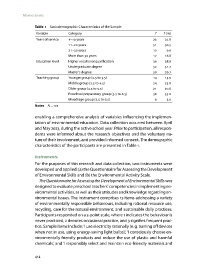
Table 1 Sociodemographic Characteristics of the Sample
Variable Category f f ()
Years of service – years .
– years .
– years .
More than years .
Education level Higher vocational qualification .
Undergraduate degree .
Master’s degree .
Teaching group Younger group (. to .) .
Middle group (. to .) .
Older group (. to .) .
Preschool preparatory group (. to .) .
Mixed-age group (. to .) .
Notes N =101.
enabling a comprehensive analysis of variables influencing the implemen-
tation of environmental education. Data collection occurred between April
and May 2023, during the active school year. Prior to participation, all respon-
dents were informed about the research objectives and the voluntary na-
ture of their involvement, and provided informed consent. The demographic
characteristics of the participants are presented in Table 1.
Instruments
For the purposes of this research and data collection, two instruments were
developedandapplied:(a) theQuestionnaireforAssessingtheDevelopment
of Environmental Skills and (b) the Environmental Activity Scale.
TheQuestionnaireforAssessingtheDevelopment ofEnvironmentalSkills was
designed to evaluate preschool teachers’ competencies in implementing en-
vironmental activities, as well as their attitudes and knowledge regarding en-
vironmental issues. The instrument comprises 15 items addressing a variety
of environmentally responsible behaviours, including rational resource use,
recycling, care for the natural environment, and sustainable daily practices.
Participants responded on a 3-point scale, where 1 indicates the behaviour is
never practiced, 2 denotes occasional practice, and 3 signifies frequent prac-
tice. Sample items include: ‘I use electricity rationally (e.g. turning off devices
when not in use, using energy-saving light bulbs),’ ‘I consciously choose en-
vironmentally friendly products and reduce the use of plastic and harmful
chemicals,’ and ‘I responsibly select and maintain eco-friendly materials and
412

