


Page 88 - Educational Leadership in a Changing World
P. 88
Monika Šimkut˙ e-Bukant˙ e and Vilma Žydži¯ unait˙ e
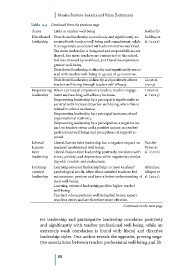
Table 4.4 Continuedfromthe previous page
Styles Links to teacher well-being Author(s)
Distributed Distributed leadership is positively and significantly as- Bellibaş et
leadership sociated with teacher well-being and commitment, while al. ()
it is negatively associated with administrative workload.
The more leadership is delegated and responsibilities are
shared, the more teachers are committed to the school,
feel less stressed by workload, and therefore experience
greater well-being.
Distributed leadership is directly and significantly associ-
ated with teacher well-being in out of countries.
Distributed leadership indirectly and positively affects Liu et al.
teacher well-being through teacher self-efficacy. ()
Empowering When a principal empowers a teacher, teacher engage- Limon et
leadership ment and teaching self-efficacy increase. al. ()
Empowering leadership by a principal is significantly as-
sociated with increased teacher well-being, when this is
related to school resilience.
Empowering leadership by a principal increases school
organizational resilience.
Empowering leadership by a principal has a negative im-
pact on teacher stress and a positive impact on teacher
professional well-being and perceptions of support re-
ceived.
Liberal/ Liberal/laissez-faire leadership has a negative impact on Van der
Laissez- teachers’ professional well-being. Vyver et
faire Liberal/laissez-faire leadership positively correlates with al. ()
leadership stress, anxiety, and depression, while negatively correlat-
ing with comfort and enthusiasm.
Learning- Learning-oriented leadership helps to meet teachers’ Abdulaziz
centred psychological needs, when these satisfied teachers feel Alfayez et
leadership autonomous, positive and have a better understanding of al. ()
their well-being.
Learning-oriented leadership predicts higher teacher
well-being.
Teachers who experience well-being feel better, experi-
ence less stress and are therefore more effective.
Continued on the next page
ive leadership and participative leadership correlates positively
and significantly with teacher professional well-being, while an
extremely weak correlation is found with liberal and directive
leadership styles. One author reveals the opposite, proving nega-
tive associations between teacher professional well-being and lib-
88

