


Page 90 - Educational Leadership in a Changing World
P. 90
Monika Šimkut˙ e-Bukant˙ e and Vilma Žydži¯ unait˙ e
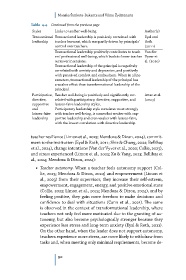
Table 4.4 Continuedfromthe previous page
Styles Links to teacher well-being Author(s)
Transactional Transactional leadership is positively correlated with Eyal and
leadership teacher burnout, which was partly driven by principals’ Roth
control over teachers. ()
Transactional leadership positively contributes to teach- Van der
ers’ professional well-being, which leads to lower teacher Vyver et
turnover intentions. al. ()
Transactional leadership of the principal is negatively
correlated with anxiety and depression, and positively
with perceived comfort and enthusiasm. When in all pa-
rameters, transactional leadership of the principal has
a weaker effect than transformational leadership of the
principal.
Participative, Teacher well-being is positively and significantly cor- Attar et al.
directive, related with participatory, directive, supportive, and ()
supportive laissez-faire leadership styles.
and Participatory leadership style correlates most strongly
laissez-faire with teacher well-being, is somewhat weaker with sup-
leadership portive leadership and even weaker with laissez-faire,
with the lowest correlation with directive leadership.
teacher resilience (Limon et al., 2023; Mendoza & Dizon, 2024), commit-
ment to the institution (Eyal & Roth, 2011; Shie & Chang, 2022; Bellibaş
et al., 2024), change intentions (Van der Vyver et al., 2020; Collie, 2023),
and stress experienced (Limon et al., 2023; Xu & Yang, 2023; Bellibaş et
al., 2024; Mendoza & Dizon, 2024):
• Teacher autonomy. When a teacher feels autonomy support (Col-
lie, 2023; Mendoza & Dizon, 2024) and empowerment (Limon et
al., 2023) from their supervisor, they increase their self-esteem,
empowerment, engagement, energy, and positive emotional state
(Collie, 2023; Limon et al., 2023; Mendoza & Dizon, 2024), and by
feeling positive, they gain more freedom to make decisions and
confidence to deal with situations (Cann et al., 2021). The same
is observed in the context of transformational leadership, where
teachers not only feel more motivated due to the granting of au-
tonomy, but also become psychologically stronger because they
experience less stress and long-term anxiety (Eyal & Roth, 2011).
On the other hand, when the leader does not support autonomy,
teachers experience more stress, are more likely to withdraw from
tasks and, when meeting only minimal requirements, become de-
90

