


Page 89 - Educational Leadership in a Changing World
P. 89
Linking School Principals’ Leadership Styles
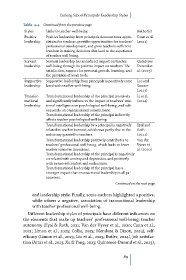
Table 4.4 Continuedfromthe previous page
Styles Links to teacher well-being Author(s)
Positive Positive leadership from principals demonstrates appre- Cann et al.
leadership ciation for teachers, provides opportunities for teachers’ ()
professional development, and gives teachers sufficient
freedom in making decisions that lead to the experience
of teacher well-being.
Servant Servant leadership has an indirect impact on teacher Quinteros-
leadership well-being through its positive impact on teachers’ life Durand et
satisfaction, support for personal growth, learning, and al. ()
the provision of work tools.
Supportive Supportive leadership from principals is positively corre- Lee and
leadership lated with teacher well-being. Swaner
()
Transfor- Transformational leadership of the principal positively Li et al.
mational and significantly influences the impact of teachers’ emo- ()
leadership tional intelligence on psychological well-being, and sub-
sequently on organizational commitment.
Transformational leadership of the principal indirectly
affects teacher psychological well-being.
Transformational leadership by a principal is negatively Eyal and
related to teacher burnout, which was partly due to the Roth
autonomy granted to teachers. ()
Transformational leadership positively contributes to Van der
teachers’ professional well-being, which leads to lower Vyver et
teacher turnover intentions. al. ()
Transformational leadership of the principal is negatively
correlated with anxiety and depression, and positively
with perceived comfort and enthusiasm.
Transformational leadership of the principal has a
stronger impact than transactional leadership in all pa-
rameters.
Continued on the next page
eral leadership style. Finally, some authors highlighted a positive,
while others a negative, association of transactional leadership
with teacher professional well-being.
Different leadership styles of principals have different influences on
the elements that make up teachers’ professional well-being: teacher
autonomy (Eyal & Roth, 2011; Van der Vyver et al., 2020; Cann et al.,
2021; Limon et al., 2023; Collie, 2023; Mendoza & Dizon, 2024), self-
efficacy (Limon et al., 2023; Liu et al., 2023; Butler, 2024), job satisfac-
tion (Attar et al., 2023; Xu & Yang, 2023; Quinteros-Durand et al., 2023),
89

