


Page 135 - Sustaining Accommodation SMES
P. 135
6.2 Quantitative Insights
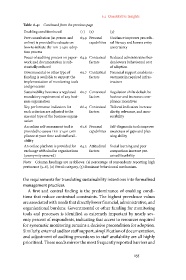
Table 6.41 Continued from the previous page
Enabling condition/need () () ()
Free consultation (in person and . Personal Guidance improves procedu-
online) is provided to educate on capabilities ral literacy and lowers entry
how to initiate the iso adop- uncertainty
tion process
Focus of auditing process on paper- . Contextual Reduced administrative bur-
work and documentation is sub- factors den lowers behavioural cost
stantially reduced of adoption
Governmental or other type of . Contextual Financial support enables in-
funding is available to support the factors vestment in required infras-
implementation of monitoring tools tructure
and processes
Sustainability becomes a regulated . Contextual Regulation shifts default be-
mandatory requirement of any busi- factors haviour and increases com-
ness organisation pliance incentives
Key performance indicators for . Contextual Tailored indicators increase
each criterion are adjusted to the factors clarity, relevance, and mea-
size and type of the business organi- surability
sation
An online self-assessment tool is . Personal Self-diagnostic tools improve
provided to assess iso com- capabilities awareness of gaps and plan-
pliance at your time and staff avail- ning ability
ability
An online platform is provided for . Attitudinal Social learning and peer
exchange with similar organisations factors comparison increase per-
(anonymity ensured) ceived feasibility
Notes Column headings are as follows: (1) percentage of respondents reporting high
pertinence (5–6), (2) Stern’s category, (3) dominant behavioural mechanism.
the requirements for translating sustainability intentions into formalised
management practices.
A first and central finding is the predominance of enabling condi-
tions that reduce contextual constraints. The highest prevalence values
areassociatedwithneedsthatdirectlylower financial,administrative,and
organisational burdens. Governmental or other funding for monitoring
tools and processes is identified as extremely important by nearly sev-
enty percent of respondents, indicating that access to resources required
for systematic monitoring remains a decisive precondition for adoption.
Similarly, external auditor staff support, simplification of documentation,
and adjustment of auditing procedures to staff availability are all highly
prioritised. These needs mirror the most frequently reported barriers and
135

