


Page 132 - Sustaining Accommodation SMES
P. 132
6Analysis
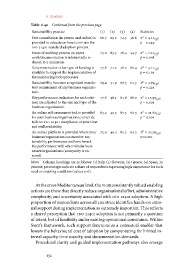
Table 6.40 Continued from the previous page
Sustainability practice () () () () Statistics
2
Free consultation (in person and online) is . .. . x = . (3) ;
provided to educate on how to initiate the p = .
iso standard adoption process.
2
Focus of auditing process on paper . . . . x = . (3) ;
work/documentation is substantially re- p = .
duced, to a minimum.
2
Governmental or other type of funding is . .. . x = . (3) ;
available to support the implementation of p = .
the monitoring tools/processes.
2
Sustainability becomes a regulated manda- . . . . x = . (3) ;
tory requirement of any business organisa- p = .
tion.
2
Key performance indicators for each crite- . . . . x = . ;
(3)
rion are adjusted to the size and type of the p = .
business organisation.
2
An online self-assessment tool is provided . . . . x = . ;
(3)
for your business/organisation to enter de- p = .
tails on iso compliance at your time
and staff availability.
2
An online platform is provided where your . . . . x = . ;
(3)
business/organisation can monitor sus- p=.
tainability performance and benchmark
the performance with other similar busi-
nesses/organisations (anonymity is en-
sured).
Notes Column headings are as follows: (1) Italy, (2) Slovenia, (3) Greece, (4) Spain. In
percent; percentages indicate a share of respondents expressing high importance for each
need or enabling condition (values 5–6).
At the cross Mediterranean level, the most consistently valued enabling
actions are those that directly reduce organisational effort, administrative
complexity, and uncertainty associated with iso 21401 adoption. A high
proportion of respondents across all countries identifies hands-on exter-
nal support during implementation as extremely important. This reflects
a shared perception that iso 21401 adoption is not primarily a question
of intent, but of feasibility under existing operational constraints. Within
Stern’s framework, such support functions as a contextual enabler that
lowers the behavioural cost of adoption by compensating for limited in-
ternal capacity, time scarcity, and documentation demands.
Procedural clarity and guided implementation pathways also emerge
132

