


Page 15 - Dalle origini ai giorni nostri: convergenze e divergenze tra lingue slave
P. 15
Epistemic and pragmatic functions of ja ne znaju ‘I don’t know’ in contemporary Russian


            gular tense, sometimes preceded by the first person pronoun ja (Table 1).
            These 176 occurrences of (ja) ne znaju make up the database of the pres-
            ent study (see table 1).

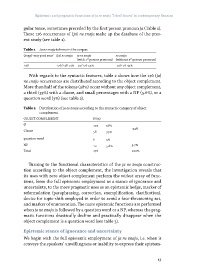
            Table 1  Ja ne znaju tokens in the corpus
            (sogg)-neg-pred znat’ (ja) ne znaju  ja ne znaju   ne znaju
                                      (with 1  person pronoun) (without 1  person pronoun)
                                           st
                                                               st
            238             176/238 74%  97/176 55%      79/176 45%
               With regards to the syntactic features, table 2 shows how the 176 (ja)
            ne znaju occurrences are distributed according to the object complement.
            More than half of the tokens (58%) occur without any object complement,
            a third (33%) with a clause, and small percentages with a NP (5.6%), or a
            question word (3%) (see table 2).


            Table 2   Distribution of ja ne znaju according to the syntactic category of object
                    complement
            OBJECT COMPLEMENT                 N (%)
            Ø                                 102   58%
                                                                 94%
            Clause                            58    33%
            question word                     6     3%
            NP                                10    5.6%        5.7%
            Total                             176               100%


               Turning to the functional characteristics of the ja ne znaju construc-
            tion according to the object complement, the investigation reveals that
            its uses with zero object complement perform the widest array of func-
            tions, from the full epistemic employment as a stance of ignorance and
            uncertainty, to the more pragmatic uses as an epistemic hedge, marker of
            reformulation (paraphrasing, correction, exemplification, clarification),
            device for topic-shift employed in order to avoid a face-threatening act,
            and marker of enumeration. The more epistemic functions are performed
            when ja ne znaju is followed by a question word or a NP, whereas the prag-
            matic functions drastically decline and practically disappear when the
            object complement is a question word (see table 3).

            Epistemic stance of ignorance and uncertainty
            We begin with the full epistemic employment of ja ne znaju, i.e. when it
            conveys the speakers’ unwillingness or inability to express their epistem-


                                                                            13

