


Page 132 - Vseživljenjsko učenje kot temelj trajnostne družbe
P. 132
Vita Jeraj and Petra Dolenc
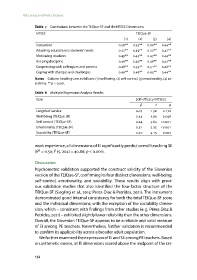
Table 7 Correlations between the TEIQue-SF and the NTSES Dimensions
NTSES TEIQue-SF
() () () ()
Instruction .** .** .** .**
Adapting education to students’ needs .** .** .** .**
Motivating students .** .** .** .**
Keeping discipline .** .** .** .**
Cooperating with colleagues and parents .** .** .** .**
Coping with changes and challenges .** .** .** .**
Notes Column headings are as follows: (1) well-being, (2) self-control, (3) emotionality, (4) so-
ciability. **p < 0.001.
Table 8 Multiple Regression Analysis Results
Item Self-efficacy (NTSES)
β t p
Length of service . . .
Well-being (TEIQue-SF) . . .
Self-control (TEIQue-SF) . . <.
Emotionality (TEIQue-SF) . . <.
Sociability (TEIQue-SF) . . .
work experience, all dimensions of EI significantly predict overall teaching SE
2
(R =0.50; F (5, 204) = 40.86; p < 0.001).
Discussion
Psychometric validation supported the construct validity of the Slovenian
version of the TEIQue-SF, confirming its four distinct dimensions: well-being,
self-control, emotionality, and sociability. These results align with previ-
ous validation studies that also identified the four-factor structure of the
TEIQue-SF (Siegling et al., 2015; Pérez-Díaz & Petrides, 2021). The instrument
demonstrated good internal consistency for both the total TEIQue-SF score
and the individual dimensions, with the exception of the sociability dimen-
sion, which – consistent with findings from other studies (e.g. Pérez-Díaz &
Petrides,2021) –exhibitedslightlylowerreliabilitythan theotherdimensions.
Overall, the Slovenian TEIQue-SF appears to be a reliable and valid measure
of EI among PE teachers. Nevertheless, further validation is recommended
to confirm its applicability across a broader adult population.
Wefurtherexaminedtheexpression ofEI andSE amongPE teachers.Based
on arithmetic means, all EI dimensions scored above the midpoint of the rat-
132

