


Page 129 - Vseživljenjsko učenje kot temelj trajnostne družbe
P. 129
Emotional Intelligence and Self-Efficacy of Physical Education Teachers
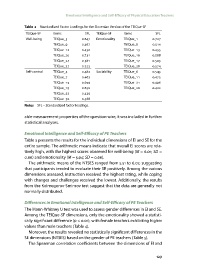
Table 2 Standardized Factor Loadings for the Slovenian Version of the TEIQue-SF
TEIQue-SF Items SFL TEIQue-SF Items SFL
Well-being TEIQue_ . Emotionality TEIQue_ .
TEIQue_ . TEIQue_ .
TEIQue_ . TEIQue_ .
TEIQue_ . TEIQue_ .
TEIQue_ . TEIQue_ .
TEIQue_ . TEIQue_ .
Self-control TEIQue_ . Sociability TEIQue_ .
TEIQue_ . TEIQue_ .
TEIQue_ . TEIQue_ .
TEIQue_ . TEIQue_ .
TEIQue_ .
TEIQue_ .
Notes SFL – Standardized factor loadings.
able measurement properties of the questionnaire, it was included in further
statistical analyses.
Emotional Intelligence and Self-Efficacy of PE Teachers
Table 3 presents the results for the individual dimensions of EI and SE for the
entire sample. The arithmetic means indicate that overall EI scores are rela-
tively high, with the highest scores observed for well-being (M =6.01; SD =
0.66) and emotionality (M =5.94; SD = 0.66).
The arithmetic means of the NTSES ranged from 5.51 to 6.07, suggesting
that participants tended to evaluate their SE positively. Among the various
dimensions assessed, instruction received the highest rating, while coping
with changes and challenges received the lowest. Additionally, the results
from the Kolmogorov-Smirnov test suggest that the data are generally not
normally distributed.
Differences in Emotional Intelligence and Self-Efficacy of PE Teachers
The Mann-Whitney U test was used to assess gender differences in EI and SE.
Among the TEIQue-SF dimensions, only the emotionality showed a statisti-
cally significant difference (p < 0.01), with female teachers exhibiting higher
values than male teachers (Table 4).
Moreover, the results revealed no statistically significant differences in the
SE dimensions (NTSES) based on the gender of PE teachers (Table 5).
The Spearman correlation coefficients between the dimensions of EI and
129

