


Page 131 - Vseživljenjsko učenje kot temelj trajnostne družbe
P. 131
Emotional Intelligence and Self-Efficacy of Physical Education Teachers
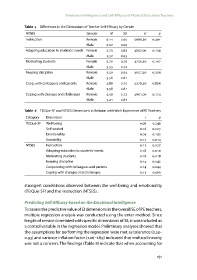
Table 5 Differences in the Dimensions of Teacher Self-Efficacy by Gender
NTSES Gender M SD U p
Instruction Female . . . .
Male . .
Adapting education to students’ needs Female . . . .
Male . .
Motivating students Female . . . .
Male . .
Keeping discipline Female . . . .
Male . .
Coop. with colleagues and parents Female . . . .
Male . .
Coping with changes and challenges Female . . . .
Male . .
Table 6 TEIQue-SF and NTSES Dimensions in Relation with Work Experience of PE Teachers
Category Dimension r p
TEIQue-SF Well-being . .
Self-control . .
Emotionality . .
Sociability . .
NTSES Instruction . .
Adapting education to students’ needs . .
Motivating students . .
Keeping discipline . .
Cooperating with colleagues and parents . .
Coping with changes and challenges . .
strongest correlations observed between the well-being and emotionality
(TEIQue-SF) and the instruction (NTSES).
Predicting Self-Efficacy based on the Emotional Intelligence
To assessthepredictivevalueofEI dimensionsin theoverallSE ofPE teachers,
multiple regression analysis was conducted using the enter method. Since
length of service correlated with specific dimensions of SE, it was included as
a control variable in the regression model. Preliminary analyses showed that
the assumptions for performing the regression were met as tolerance (0.53–
0.93) and variance inflation factor (1.06–1.89) indicated that multicollinearity
was not a concern. The findings (Table 8) indicate that when accounting for
131

