


Page 32 - Safe Wrestling
P. 32
Saša Jovanovi´ c and Matej Plevnik

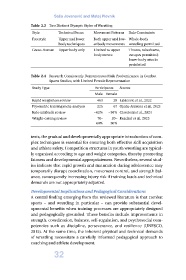
                Table 2.3 Two Distinct Olympic Styles of Wrestling
                Style        Technical Focus  Movement Patterns  Rule Constraints
                Freestyle    Upper and lower  Both upper and low- Whole-body
                             body techniques  er body movements  wrestling permitted
                Greco-Roman  Upper body only  Limited to upper  Throws, takedowns,
                                              body moves      escapes permitted;
                                                              lower body attacks
                                                              prohibited

                Table 2.4 Research Consistently Demonstrates Male Predominance in Combat
                        Sports Studies, with Limited Female Representation
                Study Type                    Participants  Source
                                              Male Female
                Rapid weight loss review       469     28 Lakicevic et al., 2022
                Plyometric training meta-analysis  225  67 Ojeda-Aravena et al., 2023
                Judo umbrella review          ∼62%  ∼38% Ciaccioni et al., 2024
                Weight-cutting review          70–    20– Ku˙ zd˙ zał et al., 2025
                                               80%    30%


                texts, the gradual and developmentally appropriate introduction of com-
                plex techniques is essential for ensuring both effective skill acquisition
                and athlete safety. Competition structures in youth wrestling are typical-
                ly organised according to age and weight categories, thereby promoting
                fairness and developmental appropriateness. Nevertheless, several stud-
                ies indicate that rapid growth and maturation during adolescence may
                temporarily disrupt coordination, movement control, and strength bal-
                ance, consequently increasing injury risk if training loads and technical
                demands are not appropriately adjusted.
                Developmental Implications and Pedagogical Considerations
                A central finding emerging from the reviewed literature is that combat
                sports – and wrestling in particular – can provide substantial devel-
                opmental benefits when training processes are appropriately designed
                and pedagogically grounded. These benefits include improvements in
                strength, coordination, balance, self-regulation, and psychosocial com-
                petencies such as discipline, perseverance, and resilience (UNESCO,
                2015). At the same time, the inherent physical and technical demands
                of wrestling necessitate a carefully informed pedagogical approach to
                coaching and athlete development.

                           32

