


Page 29 - Safe Wrestling
P. 29
Combat Sports in Youth Development

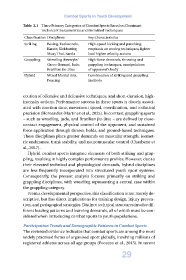
            Table 2.1 Three Primary Categories of Combat Sports Based on Dominant
                     Technical Characteristics and Permitted Techniques
             Classification Disciplines     Key Characteristics
             Striking  Boxing, Taekwondo,  High-speed kicking and punching,
                       Karate, Kickboxing,  emphasis on scoring techniques, lighter
                       Muay Thai, Sanda    load higher velocity actions
             Grappling  Wrestling (freestyle/  High-force demands, throwing and
                       Greco-Roman), Judo,  grappling techniques, manipulation
                       Brazilian Jiu-Jitsu  of opponent’s body
             Hybrid    Mixed Martial Arts,  Combination of striking and grappling
                       Fencing             methods


            ecution of offensive and defensive techniques, and short-duration, high-
            intensity actions. Performance success in these sports is closely associ-
            ated with reaction time, movement speed, coordination, and technical
            precision (Hernandez-Martinez et al., 2025). In contrast, grappling sports
            – such as wrestling, judo, and Brazilian jiu-jitsu – are defined by close-
            contact engagement, physical control of the opponent, and sustained
            force application through throws, holds, and ground-based techniques.
            These disciplines place greater demands on muscular strength, isomet-
            ric endurance, trunk stability, and neuromuscular control (Chaabene et
            al., 2017).
              Hybrid combat sports integrate elements of both striking and grap-
            pling, resulting in highly complex performance profiles. However, due to
            their elevated technical and physiological demands, hybrid disciplines
            are less frequently incorporated into structured youth sport systems.
            Consequently, the present analysis focuses primarily on striking and
            grappling disciplines, with wrestling representing a central case within
            the grappling category.
              From a developmental perspective, this classification is not merely de-
            scriptive, but has direct implications for training design, injury preven-
            tion, and pedagogical strategies. Distinct technical structures involve dif-
            ferent loading patterns and learning demands, all of which must be con-
            sidered when introducing combat sports to youth populations.
            Participation Trends and Demographic Patterns in Combat Sports
            The reviewed evidence indicates that combat sports are among the most
            widely practised forms of organised sport globally, involving millions of
            registered athletes across all age groups (Pocecco et al., 2013). In recent

                                                           29

