


Page 31 - Safe Wrestling
P. 31
Combat Sports in Youth Development

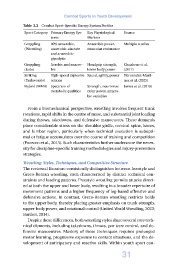
            Table 2.2 Combat Sport-Specific Energy System Profiles
             Sport Category Primary Energy Sys-  Key Physiological  Source
                         tems              Markers
             Grappling   90% anaerobic,    Anaerobic power,  Multiple studies
             (Wrestling)  anaerobic-alactate  muscular endurance
                         and anaerobic-
                         glycolytic
             Grappling   Aerobic and anaero-  Handgrip strength,  Chaabene et al.
             (Judo)      bic               lower body power  (2017)
             Striking    High-speed explosive Speed, agility, power  Hernandez-Marti-
             (Taekwondo)  actions                           nez et al. (2025)
             Hybrid (MMA) Spectrum of      Strength, neuromus-  James et al. (2016)
                         metabolic qualities  cular power, anaero-
                                           bic variables


              From a biomechanical perspective, wrestling involves frequent trunk
            rotations, rapid shifts in the centre of mass, and substantial joint loading
            during throws, takedowns, and defensive manoeuvres. These demands
            place considerable stress on the shoulder girdle, cervical spine, knees,
            and lumbar region, particularly when technical execution is subopti-
            mal or fatigue accumulates over the course of training and competition
            (Pocecco et al., 2013). Such characteristics further underscore the neces-
            sity for discipline-specific training methodologies and injury-prevention
            strategies.

            Wrestling: Styles, Techniques, and Competitive Structure
            The reviewed literature consistently distinguishes between freestyle and
            Greco-Roman wrestling, each characterised by distinct technical con-
            straints and loading patterns. Freestyle wrestling permits attacks direct-
            ed at both the upper and lower body, resulting in a broader repertoire of
            movement patterns and a higher frequency of leg-based offensive and
            defensive actions. In contrast, Greco-Roman wrestling restricts holds
            to the upper body, thereby placing greater emphasis on trunk strength,
            upper-body power, and rotational control (United World Wrestling, 2023;
            Bartlett, 2014).
              Despite these differences, both wrestling styles share several core tech-
            nical elements, including takedowns, throws, par terre control, and de-
            fensive manoeuvres. Mastery of these techniques requires prolonged
            motor learning, progressive exposure to contact situations, and the de-
            velopment of anticipatory and reactive skills. Within youth sport con-

                                                           31

