


Page 19 - Safe Wrestling
P. 19
The Importance of Injury-Preventive Behaviour

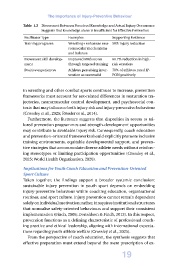
            Table 1.3 Disconnect Between Perceived Knowledge and Actual Injury Occurrence
                     Suggests that Knowledge alone is Insufficient for Effective Prevention
             Facilitator Type     Examples            Supporting Evidence
             Training programs    Wrestling+ enhances neu- 58% injury reduction
                                  romuscular mechanisms
                                  and balance
             Movement skill develop-  Improved FMS scores  66.7% reduction in high-
             ment                 through targeted training  risk wrestlers
             Positive experiences  Athletes perceiving inter-  70% of athletes rated IP-
                                  vention as successful  PON positively


            in wrestling and other combat sports continues to increase, prevention
            frameworks must account for sex-related differences in maturation tra-
            jectories, neuromuscular control development, and psychosocial con-
            texts that may influence both injury risk and injury-preventive behaviour
            (Crossley et al., 2025; Rössler et al., 2014).
              Furthermore, the literature suggests that disparities in access to tai-
            lored prevention programmes and strength-development opportunities
            may contribute to avoidable injury risk. Consequently, coach education
            and prevention-oriented frameworks should explicitly promote inclusive
            training environments, equitable developmental support, and preven-
            tive strategies that accommodate diverse athlete needs without reinforc-
            ing stereotypes or limiting participation opportunities (Crossley et al.,
            2025; World Health Organization, 2020).
            Implications for Youth Coach Education and Prevention-Oriented
            Sport Culture
            Taken together, the findings support a broader systemic conclusion:
            sustainable injury prevention in youth sport depends on embedding
            injury-preventive behaviour within coaching education, organisational
            routines, and sport culture. Injury prevention cannot remain dependent
            solely on individual motivation; rather, it requires institutional structures
            that normalise safety-oriented behaviours and support their consistent
            implementation (Finch, 2006; Donaldson & Finch, 2013). In this respect,
            prevention functions as a defining characteristic of professional coach-
            ing practice and ethical leadership, aligning with international expecta-
            tions regarding youth athlete welfare (Crossley et al., 2025).
              From the perspective of coach education, the synthesis suggests that
            effective preparation must extend beyond the mere prescription of ex-

                                                           19

