


Page 17 - Safe Wrestling
P. 17
The Importance of Injury-Preventive Behaviour

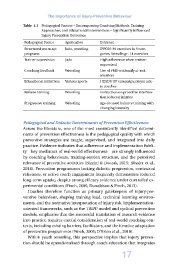
            Table 1.1 Pedagogical Factors – Encompassing Coaching Methods, Training
                     Approaches, and Educational Interventions – Significantly Influenced
                     Injury Prevention Outcomes
             Pedagogical Factor  Application     Evidence
             Structured warm-up  Judo, wrestling  IPPON: 36 exercises in 3 cate-
             programs                            gories; Wrestling+: 14 exercises
             Trainer supervision  Judo           High adherence when trainer-
                                                 supervised
             Coaching feedback  Wrestling        Use of FMS to identify at-risk
                                                 wrestlers
             Educational initiatives  Various sports  HEADS UP campaign; player safe-
                                                 ty coaches
             Referee training   Wrestling        Instruction on proactive interven-
                                                 tion reduced injuries
             Progressive training  Wrestling     Age-focused balance training with
                                                 changing intensity


            Pedagogical and Didactic Determinants of Prevention Effectiveness
            Across the literature, one of the most consistently identified determi-
            nants of prevention effectiveness is the pedagogical quality with which
            preventive strategies are taught, supervised, and integrated into daily
            practice. Evidence indicates that adherence and implementation fideli-
            ty – key mediators of real-world effectiveness – are strongly influenced
            by coaching behaviours, training-session structure, and the perceived
            relevance of preventive activities (Bizzini & Dvorak, 2015; Rössler et al.,
            2014). Prevention programmes lacking didactic progression, contextual
            relevance, or active coach engagement frequently demonstrate reduced
            long-term uptake, despite strong efficacy evidence under controlled ex-
            perimental conditions (Finch, 2006; Donaldson & Finch, 2013).
              Coaches therefore function as primary gatekeepers of injury-pre-
            ventive behaviour, shaping training load, technical learning environ-
            ments, and the normative interpretation of injury risk. Implementation-
            oriented frameworks, such as the TRIPP model and cyclical prevention
            models, emphasise that the successful translation of research evidence
            into practice requires careful consideration of real-world coaching con-
            texts, including existing barriers, facilitators, and the iterative adaptation
            of preventive programmes (Finch, 2006; O’Brien et al., 2019).
              Within youth wrestling, this perspective implies that injury preven-
            tion should be operationalised through coach education that integrates

                                                           17

