


Page 122 - Razvoj kompetenc prihodnosti v pedagoških študijskih programih
P. 122
Marjana Dolšina Delač


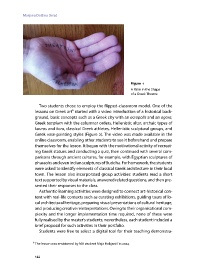
                                                                Figure 1
                                                                A Palm in the Shape
                                                                of a Greek Theatre

                    Two students chose to employ the flipped-classroom model. One of the
                  lessons on Greek art⁶ started with a video introduction of a historical back-
                  ground, basic concepts such as a Greek city with an acropolis and an agora,
                  Greek templum with the columnar orders, Hellenistic altar, archaic types of
                  kouros and kora, classical Greek athletes, Hellenistic sculptural groups, and
                  Greek vase-painting styles (Figure 2). The video was made available in the
                  online classroom, enabling other students to see it beforehand and prepare
                  themselves for the lesson. It began with the motivational activity of recreat-
                  ing Greek statues and conducting a quiz, then continued with several com-
                  parisons through ancient cultures, for example, with Egyptian sculptures of
                  pharaohsandeven Indian sculpturesofBuddha.Forhomework,thestudents
                  were asked to identify elements of classical Greek architecture in their local
                  town. The lesson also incorporated group activities: students read a short
                  textsupportedbyvisualmaterials,answeredrelatedquestions,andthenpre-
                  sented their responses to the class.
                    Authentic-learning activities were designed to connect art-historical con-
                  tent with real-life contexts such as curating exhibitions, guiding tours of lo-
                  cal architectural heritage, preparing visual presentations of cultural heritage,
                  and producing creative reinterpretations. Owing to their organisational com-
                  plexity and the longer implementation time required, none of these were
                  fully realised by the master’s students; nevertheless, each student included a
                  brief proposal for such activities in their portfolio.
                    Students were free to select a digital tool for their teaching demonstra-


                 ⁶ The lesson was envisioned by MA student Maja Habjanič in 2024.


                  122

