


Page 29 - Diversity in Action
P. 29
Developing Linguistic and Cultural Awareness at an Early Age


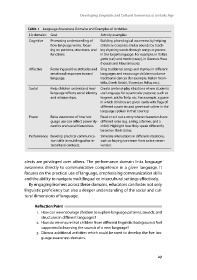
              Table 1 Language Awareness Domains and Examples of Activities
               LA domains  Goal                  Activity examples
               Cognitive  Promoting understanding of  Building phonological awareness by helping
                         how language works, focus-  children recognise similar sounds by teach-
                         ing on patterns, structures, and  ing rhyming words through songs or poems
                         functions.              in the target language. For example, in Italian
                                                 gatto (cat) and matto (crazy), in German Haus
                                                 (house) and Maus (mouse).
               Affective  Fostering positive attitudes and Sing traditional songs and rhymes in different
                         emotional responses toward  languages and encourage children to dance
                         language.               traditional dances (for example, Italian Taran-
                                                 tella, Greek Sirtaki, Slovenian Polka, etc.).
               Social    Help children understand how  Create pretend-play situations where students
                         language reflects social identity use language for a particular purpose, such as
                         and relationships.      to greet, ask for help, etc. For example, a game
                                                 in which children are given cards with flags of
                                                 different countries and greet each other in the
                                                 language spoken in that country.
               Power     Raise awareness of how lan-  Read or act out a story where characters have
                         guage use can reflect power dy- different roles (e.g. a king, a farmer, and a
                         namics and social hierarchies.  child). Highlight how they speak differently
                                                 based on their status.
               Performance Develop practical communica-  Simulate interactions in different situations,
                         tion skills in multilingual or in-  such as buying ice cream from an ice cream
                         tercultural contexts.   vendor.


             alects are privileged over others. The performance domain links language
             awareness directly to communicative competence in a given language. It
             focuses on the practical use of language, emphasising communication skills
             and the ability to navigate multilingual or intercultural settings effectively.
               By engaging learners across these domains, educators can foster not only
             linguistic proficiency but also a deeper understanding of the social and cul-
             tural dimensions of language.

                  Reflection Point
                   1. How can we encourage children to explore language patterns, sounds, and
                     structures in different languages?
                  2. How do we ensure that children from different linguistic backgrounds feel
                     supported in learning the sounds of a new language?
                   3. Discuss additional activities which could be used to develop the five lan-
                     guage awareness domains.


                                                                            29

