


Page 31 - Sustaining Accommodation SMES
P. 31
4.1 Sustainability Standards in the Accommodation Sector


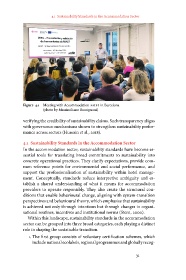
            Figure 4.1  Meeting with Accommodation smes in Barcelona
                      (photo by Massimiliano Rumignani)

            verifying the credibility of sustainability claims. Such transparency aligns
            with governance mechanisms shown to strengthen sustainability perfor-
            mance across sectors (Hussain et al., 2018).

            4.1 Sustainability Standards in the Accommodation Sector
            In the accommodation sector, sustainability standards have become es-
            sential tools for translating broad commitments to sustainability into
            concrete operational practices. They clarify expectations, provide com-
            mon reference points for environmental and social performance, and
            support the professionalisation of sustainability within hotel manage-
            ment. Conceptually, standards reduce interpretive ambiguity and es-
            tablish a shared understanding of what it means for accommodation
            providers to operate responsibly. They also create the structural con-
            ditions that enable behavioural change, aligning with system-transition
            perspectives and behavioural theory, which emphasise that sustainability
            is achieved not only through intentions but through changes in organi-
            sational routines, incentives and institutional norms (Stern, 2000).
              Within this landscape, sustainability standards in the accommodation
            sector can be grouped into three broad categories, each playing a distinct
            role in shaping the sustainable transition.

               1. The first group consists of voluntary certification schemes, which
                include national ecolabels, regional programmes and globally recog-


                                                                  31

