


Page 46 - Sustaining Accommodation SMES
P. 46
5 Research Framework and Objectives


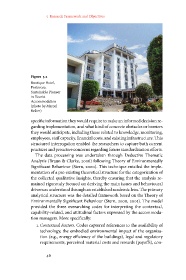
                Figure 5.2
                Boutique Hotel,
                Portorose:
                Sustainable Pioneer
                in Tourist
                Accommodation
                (photo by Marcel
                Bešter)

                specific information they would require to make an informed decision re-
                garding implementation, and what kind of concrete obstacles or barriers
                they would anticipate, including those related to knowledge, monitoring,
                employees, staff capacity, financial costs, and existing infrastructure. This
                structured interrogation enabled the researchers to capture both current
                practices and proactive concerns regarding future standardisation efforts.
                  The data processing was undertaken through Deductive Thematic
                Analysis (Braun & Clarke, 2006) following Theory of Environmentally
                Significant Behaviour (Stern, 2000). This technique entailed the imple-
                mentation of a pre-existing theoretical structure for the categorization of
                the collected qualitative insights, thereby ensuring that the analysis re-
                mained rigorously focused on deriving the main issues and behavioural
                drivers as understood through an established academic lens. The primary
                analytical structure was the detailed framework based on the Theory of
                Environmentally Significant Behaviour (Stern, 2000, 2005). The model
                provided the three overarching codes for interpreting the contextual,
                capability-related, and attitudinal factors expressed by the accommoda-
                tion managers. More specifically:
                  1. Contextual Factors. Codes captured references to the availability of
                    technology, the embodied environmental impact of the organisa-
                    tion (e.g., energy efficiency of the buildings), legal and regulatory
                    requirements, perceived material costs and rewards (payoffs), con-


                       46

